Up! Up! (Part 1)
I survived my first trip into the rainforest and can’t wait to do it all over again, but then agin I’m getting a little ahead of myself.
From December 10 – 15, I visited our two communities, San Antonio and Calabaza which make up our Colibri Project. This project is HIGH in the cloudforest, and just getting there was quite the adventure (as was the return).
When traveling from Lima to Satipo (the closest city to our communities) you must cross through the Andes Mountains. The chain extends over seven countries. At their northern reach, they begin in Venezuela, where they run south through parts of Colombia, Ecuador, Peru, Bolivia, Chile and Argentina. One of the most interesting Andes Mountains facts pertaining to Peru is that the mountain  chain’s highest concentration of snow peaks are found in Peru. The highest peak in the Peruvian Andes is Huascarán Sur, and it rises some 22,200 feet above sea level, and they are spectacular. The native people who live there are descendants of the Incas and still dress in extremely colorful traditional garments. The rainbow flag is a symbol of the Incas in Peru, and while not the actual flag of the Incas (the concept of a flag was not around during the height of the Inca culture), it came about because of all the colors they used throughout their daily traditions.
So how does one travel ‘through’ the Andes you ask, well, you go UP! So UP we went, and on a double decker bus, overnight. That’s me exhausted and maybe a little motion sick (even with a patch). Everyone else was asleep- no idea how they slept through that ride! This bus is not for the weak stomach. It goes fast, very fast. They even put their speed (km/hr) on a screen at the front of the bus. In my motion sick haze I didn’t grab a picture- trust me it was fast. But the speed isn’t what gets you, it is the winding curves UP the mountain on steep roads that really make the trip interesting. I don’t know how they do it and I don’t want to know, but they pass trucks and whip around curves like they are auditioning for Fast and the Furious 5 (?). If you love hot and very long roller coster rides then this trip is what your dreams are made of.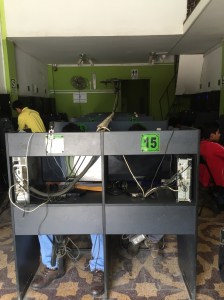
We made it to Satipo in around 10 hours, and stopped in the bus station bathroom to freshen up. Little did I know this was my last chance to wash up for the next three days. So if you are keeping count I now haven’t showered in 24 hours (not so bad, except for the fact that the extreme increase in altitude and motion sickness won over my 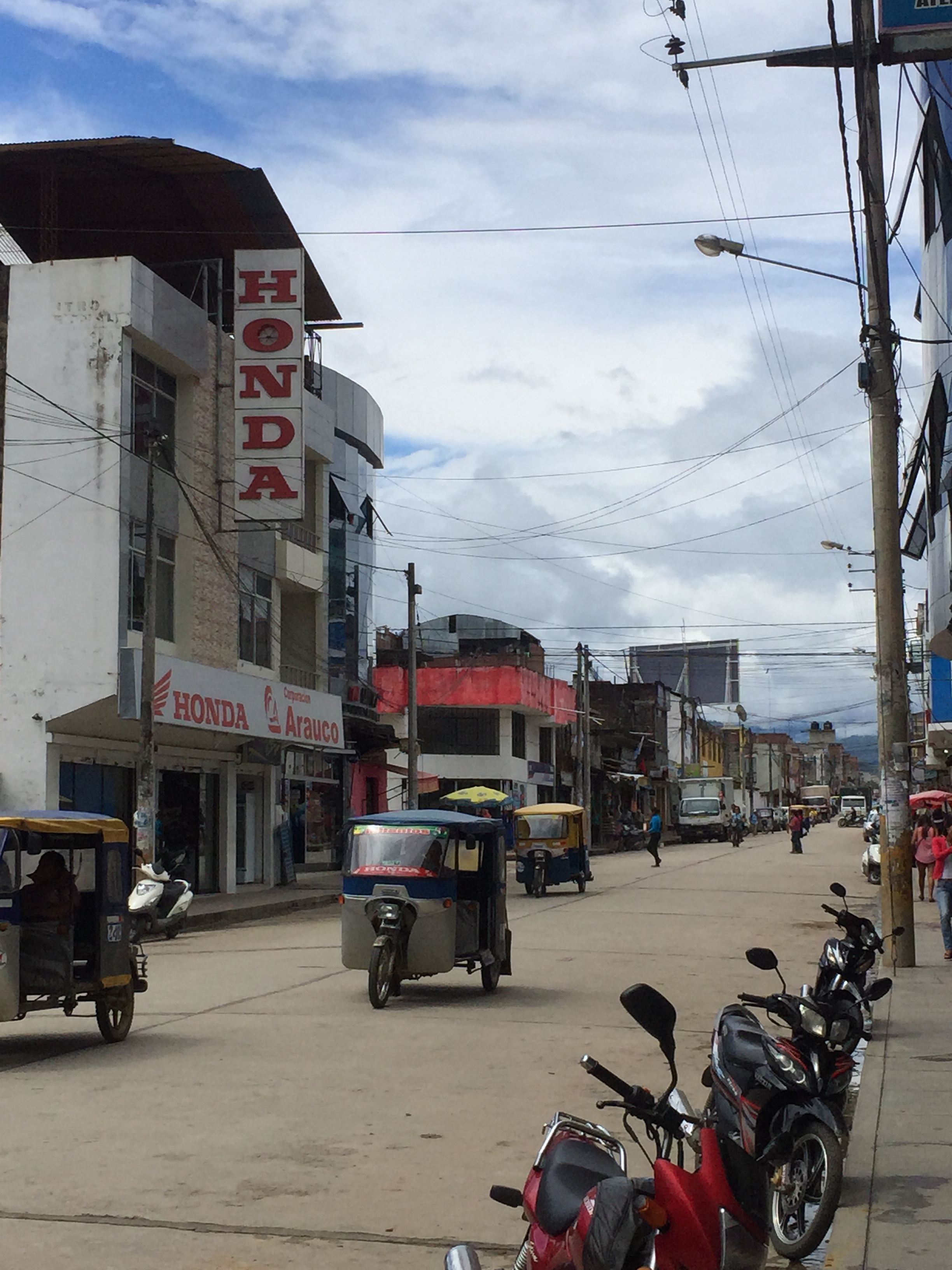 organic deoderant). From here we took a moto taxi (pictured to the left) into Satipo ‘proper’, gathered supplies and prepared to go UP into the cloud forest. When we arrived, we found out there would be a very important meeting at the municipality, and our community heads requested we attend. So we found what I can only describe as Satipo’s version of a Kinko’s and printed documents and prepared for the meeting. That’s us trying to get copies made and pull files from our emails.
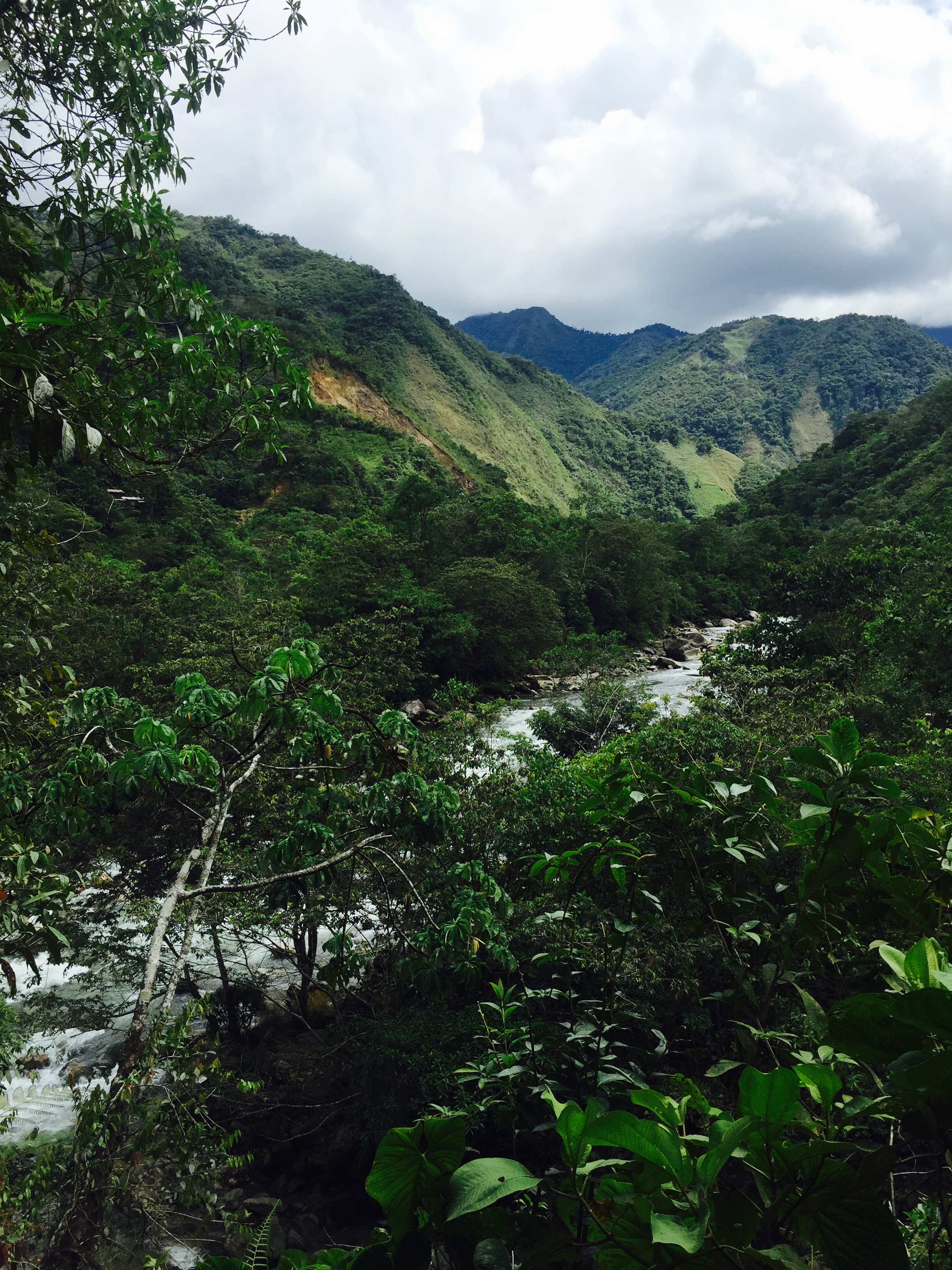
And UP we go! After all our errands were complete we prepared to go UP into Pampa 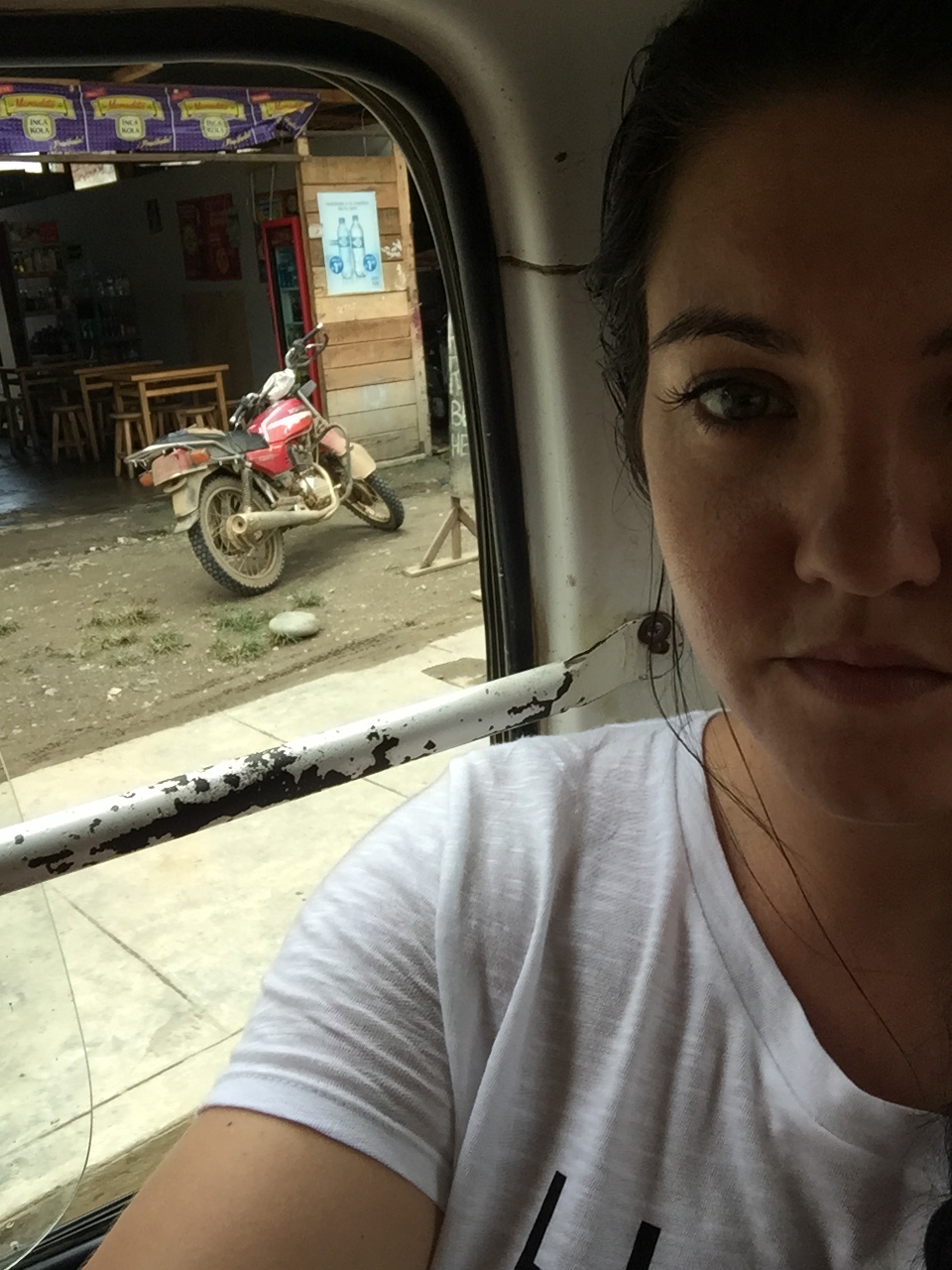 Hermosa for the meeting and then to our host’s house where we stayed in the community of San Antonio for the night (more on that in part 2). We took a Combis, or small bus, up into the mountain. Here’s me slowly recovering from the double decker bus. I should mention some people ride on the top of this Combis but we opted to stay below and talk to some of the people riding with with us. I still took some of the most stunning pictures (see below)on our way UP.
 Side note: To combat motion and altitude sickness (and I’m assuming exhaustion) people here chew coca leaves. These leaves are better than coffee, and I wish I could bring some back, but I was told these will not pass security. The leaves grow wild, the people pick them, and then press and dry them. Here a woman in the community is in the process of drying the leaves for consumption. There is also a wild plant that grows in the jungle and the only thing I could understand is that is is called Up! Up! (with a smirk.)
And UP we went (no plants were used in the above ascent).

 Disruptive Force for Good
Leave a comment